
PhD Dissertation Project | 2020–ongoing
ÖAW Doc-Fellow (2023-2024): Recipient of a DOC Fellowship of the Austrian Academy of Sciences at the Institute of Art Theory and Cultural Studies at the Academy of Fine Arts Vienna.
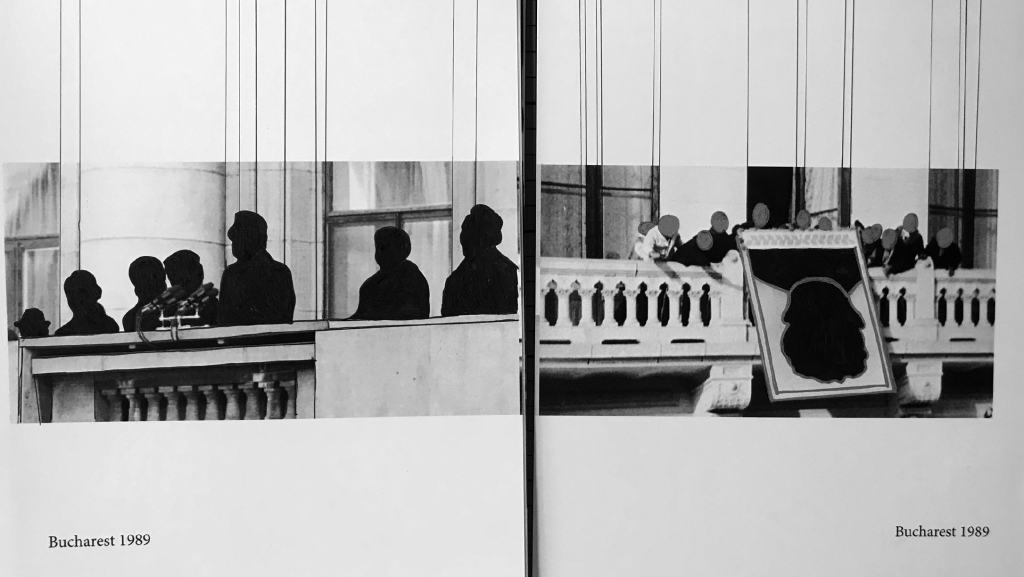
Excerpt from Fall From A Balcony (2018/2020), Eylem Ertürk
The PhD research on The Politics of the Balcony in Contemporary Art explores art practices that deal with political histories in public space. It focuses on the balcony as a site of public address and representational space of power, a liminal space between the private and public realms, between the inside and outside, between the “above” and “below”. It investigates the political meaning of the balcony through visual and performative analysis of two recurring acts: balcony speeches by political figures in the last century and contemporary art practices on or related to the balcony. The political action in balcony speeches, its performativity, and spatial dimensions have been captured visually in photographs and shared in various media. Using these materials as resources, the research investigates the representational elements of political speeches through the practice of semiotics. It deconstructs the images of balcony speeches to explore different aspects of political representation through elements of architecture, the performance of bodies, and assembly in public space. It aims to reveal the symbols and dynamics of creating a representational space of power and investigates how this knowledge is used in artistic strategies. The balcony has been a contested subject, a critical place, an image, and a statement in contemporary art through photographs, video works, paintings, performances, installations, interventions, exhibitions, etc. By analysing a wide range of contemporary artworks in relation to their political and social context, the research critically examines the artistic strategies in dealing with a space of political power. How can art respond to public spaces with troubling histories without reproducing the performance of hegemonic power or creating an image of oppositional power, but instead appropriating public space for a critical reflection and negotiation of power? Researching the relations between balcony speeches, the public sphere, and artistic practices offers new perspectives on the public function and political philosophy of the balcony, and I hope will contribute to debates on artistic strategies dealing with power and representation in public space.
 Eylem Ertürk